
DATING AFTER 50
Can You Spot a Fake AI Dating Profile?
Dating again after 50? Learn why photos and warm messages can be misleading, how to recognize a false profile, and when to slow down or step away.
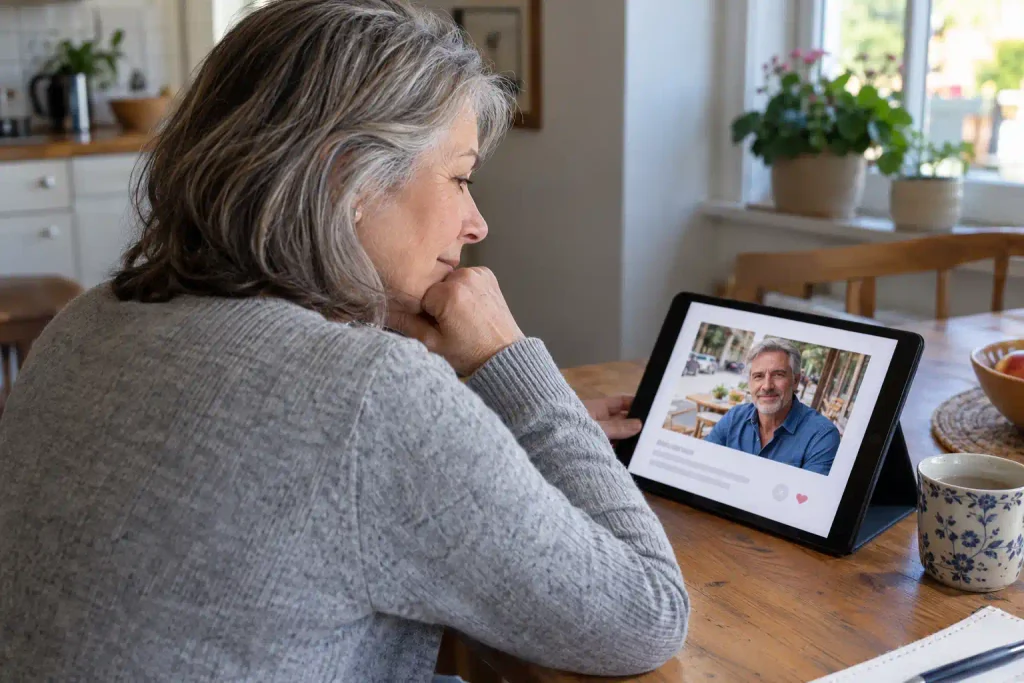
The man in the photograph looks about your age. He’s sitting outside a café, wearing a faded blue shirt and smiling at whoever took the picture. His profile says he’s divorced, likes to cook, and would rather spend a Sunday walking around a farmers market than watching television. After a few disappointing matches, he seems refreshingly ordinary.
You start messaging. He remembers that your daughter recently moved, asks how your garden is doing, and sends good-morning notes without being pushy. A week later, though, you realize you still know very little about his everyday life. He has a reason for every unanswered question, and the coffee you suggested never quite makes it onto the calendar.
If you’re dating after divorce following a long marriage, that uncertainty can be unsettling. You’re already learning how to meet people through a screen. Now you also have to consider whether the face on that screen belongs to the person writing to you—or to anyone at all.
The Dating World Has Changed Since Your Last First Date
There was a time when meeting someone usually meant knowing a little about where they came from. Perhaps a friend introduced you, or you worked in the same building. That didn’t make dating completely safe or straightforward, but a new person’s identity generally wasn’t the first mystery you had to solve.
Dating apps have removed much of that shared context. A profile may offer a first name, a few photographs, and a short account of somebody’s interests, with almost no way to know what sits behind it. AI adds another layer: a person can invent a convincing face or use software to help write messages. Criminals also steal photographs of real people, which means a perfectly ordinary-looking picture tells you surprisingly little.
The FBI has warned that scammers use AI-generated images and messages to make their stories more convincing. That doesn’t make every edited picture or polished introduction dishonest. Plenty of genuine daters get help choosing photos or writing a bio. The concern begins when the profile presents a person or a life that doesn’t exist.
The Problem With Judging Someone by Their Pictures
A few years ago, online advice about AI photographs often pointed to strange fingers, mismatched earrings, or distorted backgrounds. Looking closely can occasionally reveal a problem, but those clues are much less dependable now. A face may be computer-generated, a real person’s photograph may have been stolen, or the image may be entirely genuine while the story attached to it is false.
Think of the photos you might put on your own profile: one from a family gathering, one taken on vacation, perhaps a slightly unflattering picture a friend insists captures your personality. A fake profile can imitate that casual variety. The important question isn’t whether the photographs look professional, but whether they match a believable account of the person’s life over time.
| Search result | What it means |
|---|---|
| The same photo appears under different names. | That is a reason to question the profile and look more closely at the story. |
| No matching photo appears. | That does not verify the person. A generated image may be new, and a real photo may never have been indexed. |
Why a Lovely Conversation Can Still Leave You Uneasy
What draws you back to a dating app isn’t usually the photograph alone. It’s the message that makes you laugh while you’re making dinner, or the person who remembers something you mentioned three days earlier. After divorce, when affection may have been missing from your life for quite some time, those small moments can feel unexpectedly important.
This is where a fabricated profile can become harder to recognize. A person running several accounts may lean on software to draft warm replies, while a bot may keep a conversation moving without ever sharing an actual life. But frequent messages, careful grammar, and quick replies aren’t evidence of deception on their own. Some people are simply enthusiastic texters; others use AI to improve their wording because writing doesn’t come easily to them.
Notice the pattern across your conversations
- What you share: You have talked about your family and your marriage.
- What stays vague: Questions about their work, friends, or ordinary routine repeatedly go nowhere.
- What moves quickly: Strong feelings arrive before you have had time to get acquainted.
One awkward exchange may have an innocent explanation. If the connection keeps becoming more intimate without becoming more grounded, reconsider how much of yourself you are sharing.
Getting to Know Someone Without Conducting an Investigation
You can ask the same questions you would ask someone sitting across from you at lunch: what they did over the weekend, what they enjoy about their neighborhood, or how they spend time with friends. The point isn’t to quiz them on street names or demand proof of every detail. Over several conversations, most people naturally reveal a sense of their routines, preferences, and relationships.
A short video chat can also help two people feel more comfortable before meeting, although not everyone wants to be on camera right away. Someone may have a genuine privacy concern or simply dislike video calls. Repeatedly avoiding any reasonable way of moving the connection forward becomes more significant when other parts of the story also don’t add up. And because video can be manipulated, a call isn’t a guarantee that every claim is true.
When the Story Turns Into a Request for Money
Picture the conversation taking a sudden turn after several weeks. A travel problem has stranded him abroad, he says, or a family member needs urgent treatment. He’s embarrassed to ask, and he promises to repay you as soon as the bank sorts out an issue. By this point, you may feel as though you’re helping a person you know well, even though you haven’t met him.
If the conversation turns to money
The request may involve gift cards, a wire transfer, cryptocurrency, or an investment account. The common thread is pressure to act on a relationship that exists largely through messages.
- Pause before paying. An urgent story does not require an immediate decision.
- Keep money out of the connection. The FTC’s guidance on romance scams advises against sending money or gifts to a romantic interest you have not met in person.
- Stop and report suspicious contact. Use the dating platform’s reporting tools.
If you’ve sent money, contact the payment provider or bank promptly, keep records of the conversation, and report the incident through ReportFraud.ftc.gov. You can also report the profile within the dating app. Embarrassment can make people reluctant to say anything, particularly after opening up to someone about a divorce or a difficult period of life. Yet the deception belongs to the person who carried it out, not to the person who believed a convincing story.
The Part That Stays With You After You Close the App
An encounter with a fake profile may never lead to a financial loss. You might notice the contradictions early, stop replying, and move on. Even then, there’s the irritation of having spent your evenings talking to someone who may never have existed, especially when you had only recently talked yourself into dating again.
Perhaps your life after divorce is finally settled. You’ve made the house feel like yours, found a weekend rhythm you enjoy, and discovered that being alone doesn’t always mean feeling lonely. Trying to meet a partner was supposed to add something to that life, not turn your phone into another source of stress. You may decide to take a break from apps, ask a friend to introduce you to someone, or keep using the same platform with more care about what you share.
One disappointing exchange doesn’t tell you much about the next person. The next profile may belong to somebody who writes awkwardly, has an ancient phone, and would much rather talk about a tomato plant than describe an ideal romance. You won’t know whether you get along until you spend some time talking—and, when it feels appropriate and safe, meeting. There is no need to rush that process just because a stranger appears eager to move faster.
Frequently Asked Questions
Can AI-generated dating photos look completely real?
Yes. Modern AI tools can create highly realistic photographs. Distorted fingers and unusual backgrounds are no longer dependable ways of identifying generated images. Even an ordinary-looking photograph may have been stolen from someone else’s account.
Can a real person use AI to write dating messages?
Yes. Some people use AI to improve grammar or write a clearer introduction. That doesn’t automatically mean they’re dishonest. There is a difference between using writing assistance and creating a false identity to deceive someone.
Is a video call enough to verify someone’s identity?
Not necessarily. A video call can make an online connection feel more personal, but manipulated or AI-generated video can also be used deceptively. It is better to consider the person’s behavior and the consistency of their story over time.
What should I do if someone I’ve met online asks for money?
Avoid sending money, financial information, or identifying documents to someone you haven’t met in person. If you suspect a scam, stop communicating and report the account to the platform. If you’ve already transferred funds, contact your bank or payment provider promptly.
Ready to Start Your Next Chapter?
Explore dating advice, relationship ideas and practical guidance created for singles over 50.