
DATING AFTER DIVORCE
Would You Get Married Again After Divorce?
After divorce, wanting a serious relationship does not automatically mean wanting marriage again. Here is how to think about commitment, independence, money, family, and what remarriage would actually change after 50.
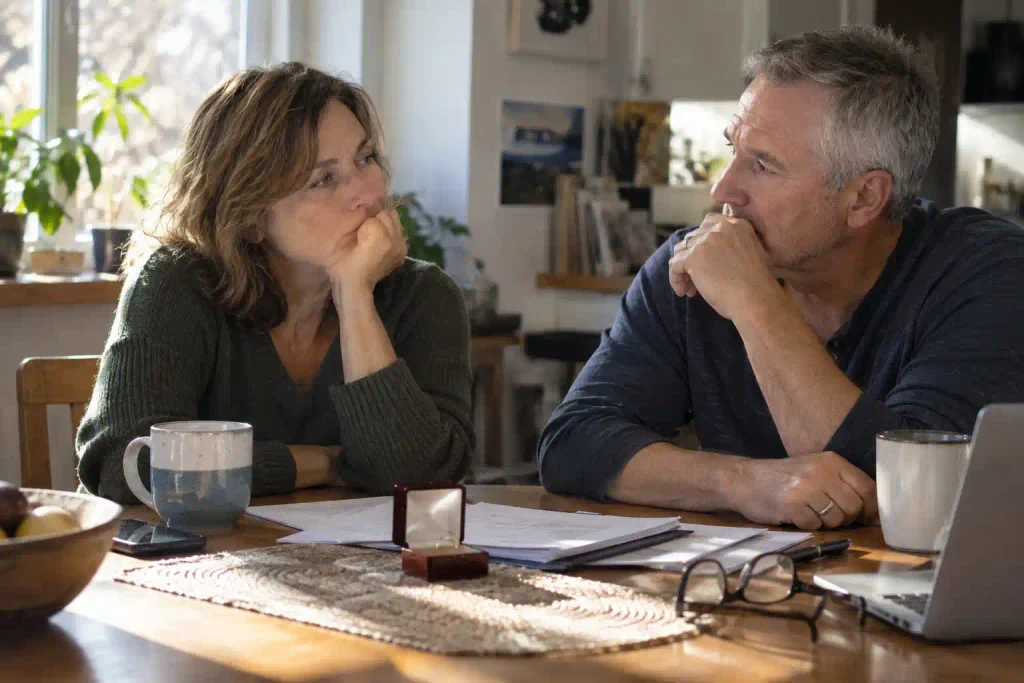
“I’m never getting married again” can feel less like a passing reaction and more like a promise to yourself, especially after a divorce. You remember the legal process, the financial decisions, the changes at home, and how long it took to feel steady on your own again.
Then life changes. You meet someone you trust. Weekends become holidays together, you meet each other’s families, and the relationship begins to feel less temporary. Eventually, a question that once seemed settled comes back: Would you ever get married again?
That question can be surprisingly complicated after 50. Wanting a partner again and wanting a spouse again are not necessarily the same decision. You may believe deeply in love and growing old with someone while still being unsure whether marriage belongs in the next chapter of your life.
The real question is not simply, “Do I believe in marriage?” It is whether marriage still fits the life you have built and the kind of commitment you want now.
Marriage Is a Different Question the Second Time Around
The first time you married, you may have been building almost everything at once: a household, careers, savings, family traditions, and plans for the future. After 50, the starting point can look very different. You may already own a home, have retirement savings, adult children, or an estate plan shaped around the family you already have.
You may also have something harder to measure: a life that feels like your own. Maybe you enjoy having your own space. Maybe you rebuilt your finances slowly after divorce. None of that means you are unwilling to love again. It means a new relationship is entering a life that already has structure.
So the question changes. Instead of asking only, “Do I want to build a life with this person?” you may also be asking, “How much of the life I already built do I want to combine?”
The U.S. Census Bureau has documented how divorce, widowhood, and remarriage remain part of later life for many Americans. Many people reach this stage with a much longer relationship history than they had the first time they considered marriage.
Some People Still Want to Call Someone Their Husband or Wife
For some people, marriage still matters deeply. It may have little to do with wanting another wedding. The words husband and wife can carry meaning that boyfriend, girlfriend, or partner does not. Marriage may represent a public choice, a shared future, or the feeling that both people have made the relationship unmistakably serious.
Marriage can mean
- a clear lifelong commitment
- being recognized as family
- a shared plan for later life
It can also raise questions about
- property and housing
- retirement and inheritance
- responsibilities to adult children
Depending on where you live and your circumstances, marriage can affect taxes, benefits, property rights, and inheritance. Those effects vary, so they are worth checking rather than assuming. But for many people, the emotional question still comes first: Do I want this lifelong relationship to be a marriage?
“I Never Want to Get Married Again” Does Not Mean “I Don’t Want Commitment”
The opposite answer can be just as serious. Someone who says, “I never want to marry again,” may still want a loyal, exclusive, long-term relationship. They may want to travel together, spend holidays together, help each other through difficult years, and remain partners for the rest of their lives.
What they may not want is another legal and financial merger. A person may have spent years rebuilding savings, keeping a home, recovering from debt, or creating a retirement plan that works on one income. Adult children can add another layer when inheritance, family property, or caregiving responsibilities are involved.
Keep in mind: Rebuilding at 60 can feel very different from rebuilding at 30. Being cautious about another major financial change does not automatically mean someone is cautious about love.
An AARP guide to remarriage highlights practical issues couples may need to discuss, including adult children, retirement, estate plans, shared expenses, and prenuptial agreements. These are not reasons to avoid marriage. They are reasons to understand what saying yes would actually change.
Love and Marriage Do Not Have to Be the Same Decision
After divorce, there are more ways to build a serious relationship than moving directly from dating to marriage. Some couples remarry. Some live together without marrying. Others keep separate homes while remaining committed long term.
Marriage: Build a legally recognized union while deciding what to combine and what to keep separate.
Living together: Share a home and daily life without making marriage part of the relationship.
Living apart together: Keep separate homes while maintaining a committed long-term partnership.
These choices are not legally identical, and they do not carry the same financial consequences. But they help separate two questions that are often treated as one: How committed do we want to be, and how much of our lives do we want to combine?
Research from Bowling Green State University describes cohabitation as an increasingly important alternative to remarriage among older adults. That does not mean one model is better than another. It shows that marriage is not the only way older couples build lasting partnerships.
The Hard Part Is When You Want Different Things
The real difficulty often begins when one person wants marriage and the other does not. “I love you, but I never want to get married again” may sound clear to the person who went through a painful divorce. To the partner hearing it, however, the message may feel different.
One person may be thinking:
I do not want to risk my home, retirement, or independence again.
The other may be hearing:
You want me in your life, but you do not see me as your future spouse.
Now the couple is no longer talking only about marriage. They are talking about what marriage represents. One person may associate it with financial risk or losing independence. The other may associate it with security, belonging, commitment, or being fully chosen.
That is why “Why do we need a piece of paper?” is rarely a useful answer. Neither is “If you really loved me, you would marry me.” A better conversation starts with a different question: What does marriage represent to each of us?
Before You Say Yes—or “Never Again”—Ask Better Questions
You do not need to decide whether remarriage is generally good or bad. You need to understand what it would change in your particular relationship.
- What would marriage give us that our relationship does not have now?
- What am I afraid marriage could take away?
- Would either of us expect our finances to change?
- What would happen to the homes and routines we already have?
- How could marriage affect our adult children, estate plans, or retirement decisions?
- If we never married, would either of us eventually feel disappointed, insecure, or resentful?
The answers may reveal that the disagreement is smaller than it first appeared. Someone who fears losing financial independence may be open to marriage while keeping parts of their finances separate. Someone who says marriage is essential may discover that what they most need is a clearer commitment or shared plan.
If marriage would affect significant property, retirement accounts, pensions, inheritance, debt, or an estate plan, professional legal or financial advice may be appropriate. Rules differ by jurisdiction, so it is worth understanding what marriage would mean in your own situation.
You Don’t Have to Give the Answer You Gave After Your Divorce
Immediately after a divorce, “never again” can be an entirely honest answer. It may reflect exhaustion, financial fear, or simply the relief of having your own space again. Years later, your answer may still be no. Or it may have changed.
You may meet someone who makes marriage feel appealing again. You may also discover that what you want now is a committed relationship with more independence than your previous marriage allowed. Changing your mind does not make your earlier answer false, and keeping the same answer does not mean you are stuck in the past.
After divorce, the question may no longer be whether you believe in marriage. It may be what kind of commitment you want the next chapter of your life to contain.
Ready to Start Your Next Chapter?
Explore dating advice, relationship ideas and practical guidance created for singles over 50.